Wardrobe guide
A Plain-English Guide to Fabrics for Everyday Clothes
Published: · By Moda Selection editors
A fabric label cannot tell you whether a garment is good, but it can help you predict the next six months: how the piece will feel, whether it will wrinkle on the train, and if you will resent its care instructions.
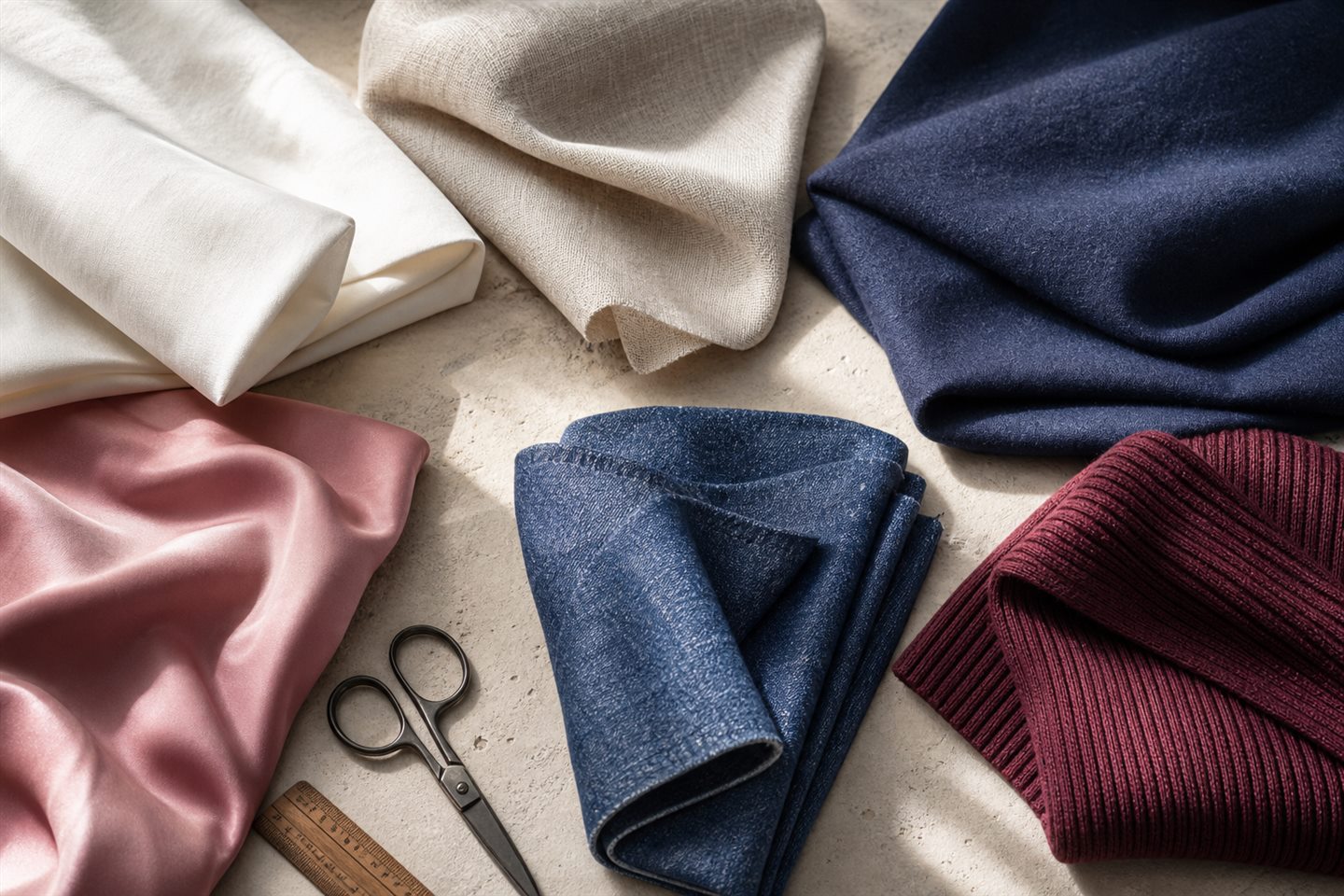
Cotton: familiar, useful, not automatically simple
Cotton can be crisp or soft, light or substantial. A poplin shirt behaves differently from a heavy jersey tee even though both labels say cotton. Hold the fabric to the light, rub it gently between two fingers, and look at the seams. Thin cotton is not necessarily poor quality, but it should feel intentional rather than flimsy.
Check whether the care label warns about shrinkage and whether the garment has room to change slightly after washing. For a fitted tee or close shirt, a small amount of stretch can make daily wear more forgiving.
Linen: choose it because it creases
Linen moves air well and develops a relaxed texture quickly. If every crease will bother you, pure linen may spend more time on the hanger than on your body. A linen blend often feels a little smoother and may recover better during the day, though the exact result depends on the weave and the other fiber.
The honest fitting-room test is to sit down for a few minutes. Stand up, look at the lap and hip, and decide whether that lived-in finish feels charming or untidy to you.
Wool: more varied than a winter coat
Fine wool can be light, breathable, and useful across seasons; heavier wool brings warmth and structure. The deciding questions are skin sensitivity, care, and how often the piece will rest between wears. Try knitwear against your neck or inner arm, not only over another layer.
Read the care label before becoming attached. A dry-clean-only trouser may be reasonable for occasional wear and annoying for a weekly commute.
Viscose and rayon: fluid, cool-feeling, sometimes demanding
These fibers are often used for dresses and blouses because they drape well. They can also crease, shrink, or feel weaker when wet, depending on the construction. Look for pulling at buttonholes and seams, and check whether the garment twists on the hanger. If the piece is cut on the bias, a little movement is expected; obvious distortion is not.
Polyester and nylon: judge the garment, not the argument
Synthetics can add durability, quick drying, stretch, weather resistance, and shape retention. They can also hold odor or feel warm. A technical jacket and a summer blouse ask different things of a fiber, so the percentage alone is not a verdict.
Wear the garment for several minutes. Does heat build under the arms? Does the lining cling? Does the fabric make a sound when you move? Those observations will tell you more about repeat wear than a blanket rule about “natural” or “synthetic.”
Blends can solve real problems
A small amount of elastane may help trousers recover at the knee. Polyester can help a pleat hold. Nylon can strengthen a soft knit. The useful question is whether the blend improves the garment's job. If it does, purity is not a virtue.
The five-minute fitting-room fabric test
Sit, raise your arms, check the garment in daylight, read the care label, and imagine the next wash. Then ask one unfashionable question: do I already own the tools and patience to care for this? A fabric you can live with is more valuable than one you admire only when it is new.