Shoe care
How to Stop Shoes From Smelling Without Just Covering the Odor
Published: · By Moda Selection editors
The usual response to smelly shoes is to spray something floral into them and hope the two smells reach an agreement. A better fix starts with moisture, drying time, and the parts of the shoe that hold on to both.
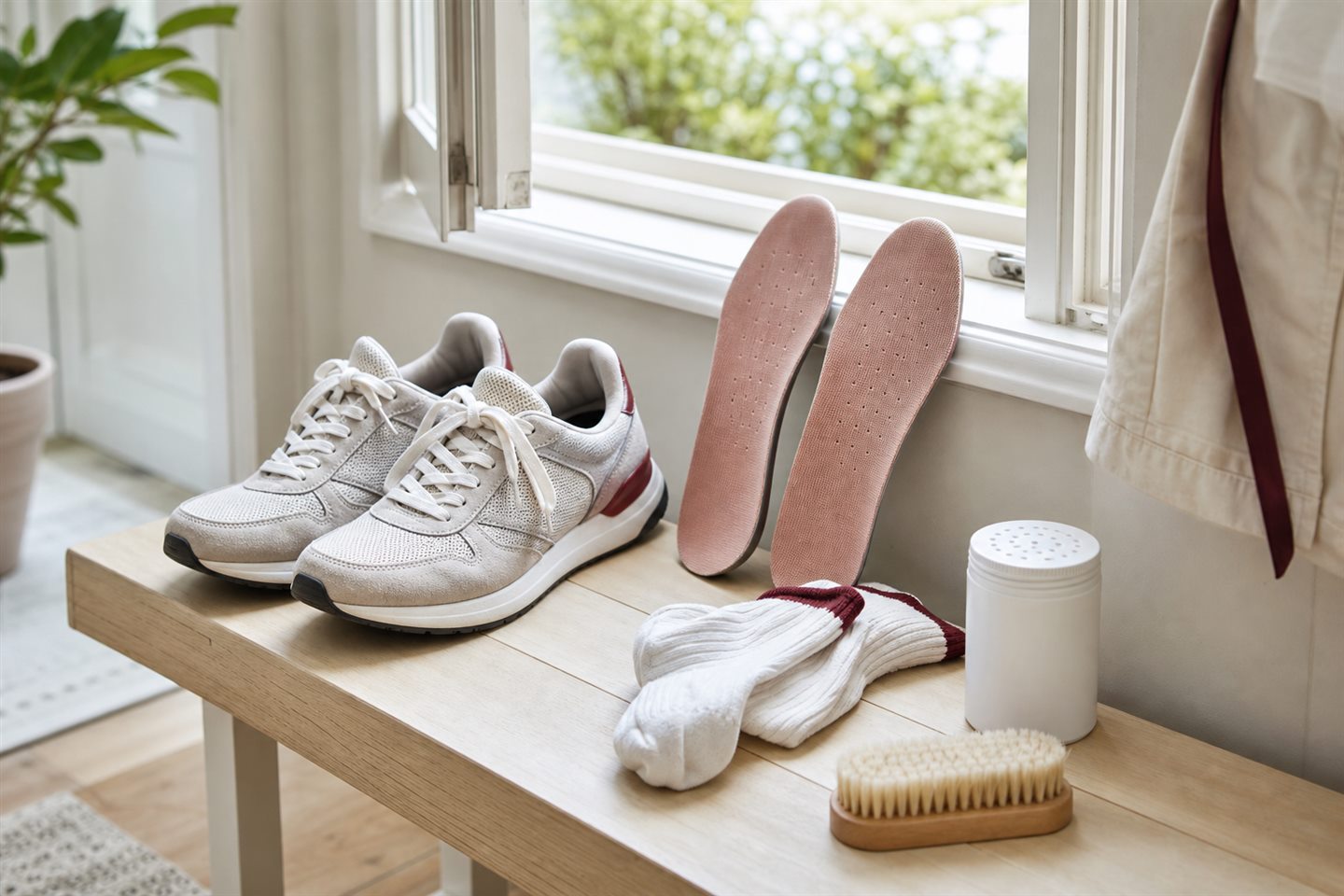
Let the shoes dry completely between wears
The NHS advises letting shoes dry before wearing them again. That sounds almost too simple, but it is the habit most likely to disappear during a busy week. Shoes worn for a commute, workout, or long shift may still feel damp the next morning even when the outside looks dry.
Open the laces, pull the tongue forward, and remove detachable insoles so air can reach the interior. Keep the shoes in a ventilated room away from direct high heat. A radiator or hair dryer can distort some materials and weaken adhesives. If one pair is worn hard every day, rotating between two suitable pairs gives each one a real chance to dry.
Fresh socks matter more than a stronger fragrance
Change into clean socks every day and after a particularly sweaty commute or workout. Breathable or moisture-managing fabrics may feel better than a sock that stays damp against the foot, but the best material still needs regular washing. Do not put yesterday's “probably fine” socks back into a freshly aired shoe.
Keep feet clean and dry, including between the toes
Wash feet regularly and dry them carefully, especially between the toes. If you use a foot powder or antiperspirant, follow its directions and stop if it irritates the skin. The goal is to manage moisture, not to layer five scented products over it.
Persistent heavy sweating can have causes that deserve individual advice. A healthcare professional can help if ordinary hygiene and footwear changes are not making a difference.
Clean the part that actually holds the odor
Check the care instructions before washing any shoe. Some textile sneakers tolerate gentle cleaning; leather, suede, coated finishes, and glued constructions need different treatment. Start by brushing out dry debris and cleaning removable insoles according to their instructions. Replace insoles that remain compressed, damaged, or strongly odorous after proper cleaning and drying.
Do not soak a shoe simply because an online trick promises a dramatic reset. Saturating foam, lining, and adhesive can create a slow-drying problem that is worse than the original one.
Store shoes where air can move
A closed plastic box is useful for dust control only when the shoes are completely dry. After wear, leave them in an open, ventilated place first. Empty gym bags and work totes when you get home; a damp pair forgotten in a zipped compartment for two days will undo a careful cleaning routine surprisingly fast.
Treat recurring odor as a clue
If odor returns within hours, look at the whole system: the same shoes worn daily, damp insoles, socks that trap moisture, or a bag that never gets emptied. Fixing one spray bottle into the routine will not compensate for all four.
Itching, peeling, broken skin, a rash, pain, or a sudden change in odor can point to a foot problem rather than a housekeeping problem. Seek qualified medical advice instead of repeatedly treating the shoes alone.
This article provides general footwear and hygiene information. It is not a diagnosis or treatment plan for a foot or skin condition.