Buying guide
How to Choose a Portable Charger Without Overbuying
Published: · By Moda Selection editors
The largest battery is easy to compare and annoying to carry. A better portable charger is sized for the moment your device usually runs low, with the ports and power to solve that problem efficiently.
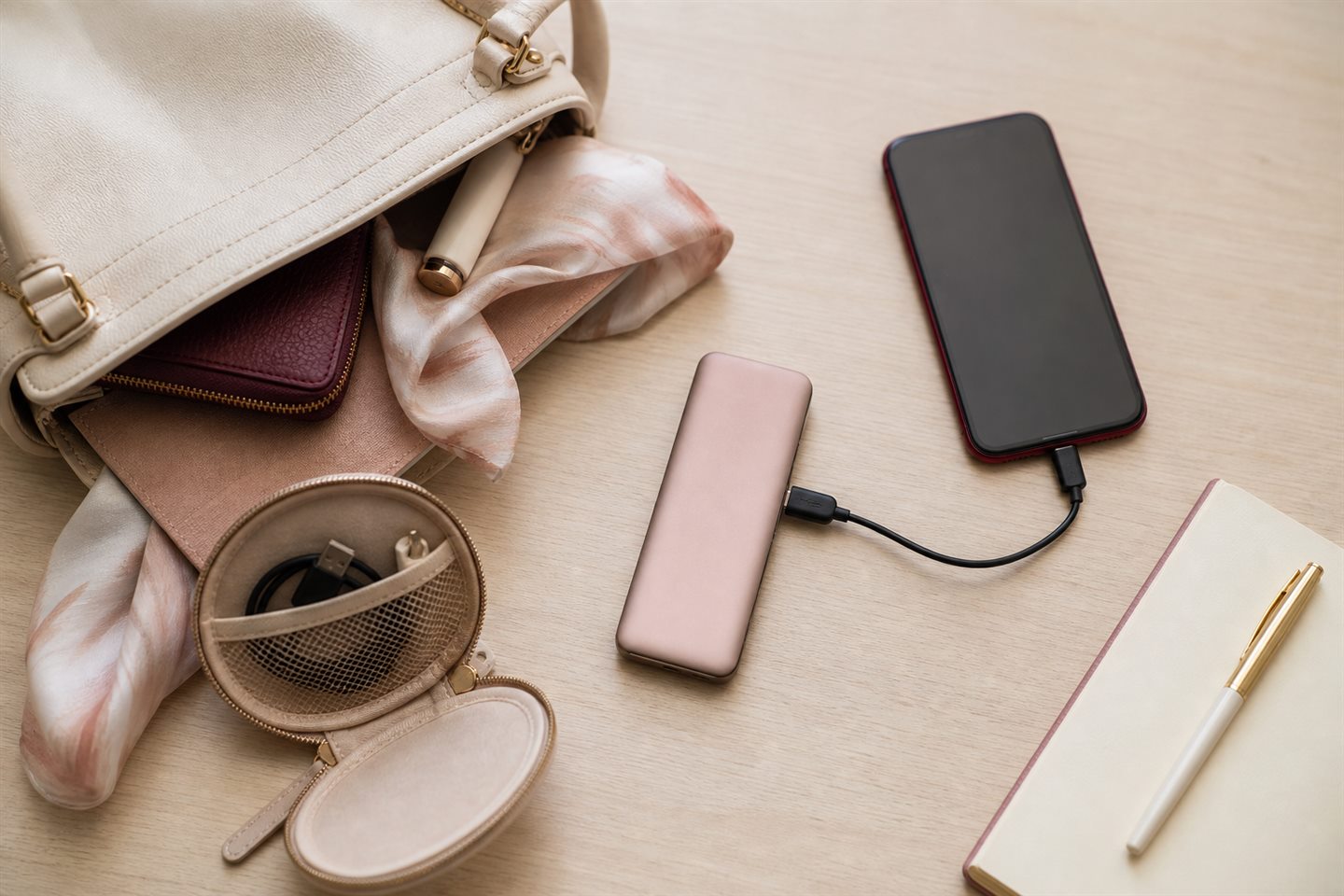
Start with the device and the day
A phone top-up during a commute asks for a different battery than a laptop used away from a socket. List the devices you genuinely plan to charge and how long you need them to last. If the answer is “one phone until dinner,” a slim battery may be the one you carry consistently.
Capacity on the box is not capacity at the device
Power banks lose some energy while converting and transferring power, so the advertised battery capacity does not arrive at your phone in full. Treat “number of charges” claims as estimates that depend on the device, cable, temperature, and how the test was performed.
Capacity still helps compare similar products. It just should not be read as a promise of an exact number of full charges.
Check output, not only capacity
Power output determines how quickly—and whether—a charger can support a device. Compare the device's charging needs with the output of the relevant port. If you plan to charge two things at once, check the charger's combined-output diagram; the maximum printed on the box may apply only when one port is used.
The cable has to support the plan
A capable charger paired with the wrong cable may charge more slowly than expected. USB-IF certification and clearly marked cable power ratings can make shopping less ambiguous. Buy from a source that provides traceable specifications rather than a listing built only around superlatives.
Ports should reduce what you carry
USB-C input and output can allow one cable to recharge the battery and charge a device. An attached cable is convenient until it wears out; a removable cable is replaceable but easier to forget. Neither design is universally better. Choose the inconvenience you are less likely to create.
Safety information should be easy to find
Look for a clear model number, manufacturer contact information, electrical ratings, warranty terms, and any relevant safety certification for your market. Do not keep using a battery that is swollen, damaged, unusually hot, or subject to a recall.
Air travel has separate rules
In the United States, the FAA says power banks are spare lithium batteries and must travel in carry-on baggage, not checked baggage. Larger batteries face additional limits, and airlines or other countries may apply stricter rules. Check your airline and destination before travel rather than relying on an old packing list.
Do the bag test
Place the battery, its cable, and your phone in the pocket where they will live. If the setup is too heavy or awkward, it is already failing. The charger you carry and recharge regularly is the useful one.