Style guide
Five Everyday Outfit Formulas That Take the Guesswork Out of Dressing
Published: · By Moda Selection editors
An outfit formula is not a uniform and it is not a shopping list. It is a dependable relationship between shapes: a close layer under an open one, a wide trouser with a compact top, or a simple dress grounded by an everyday shoe.
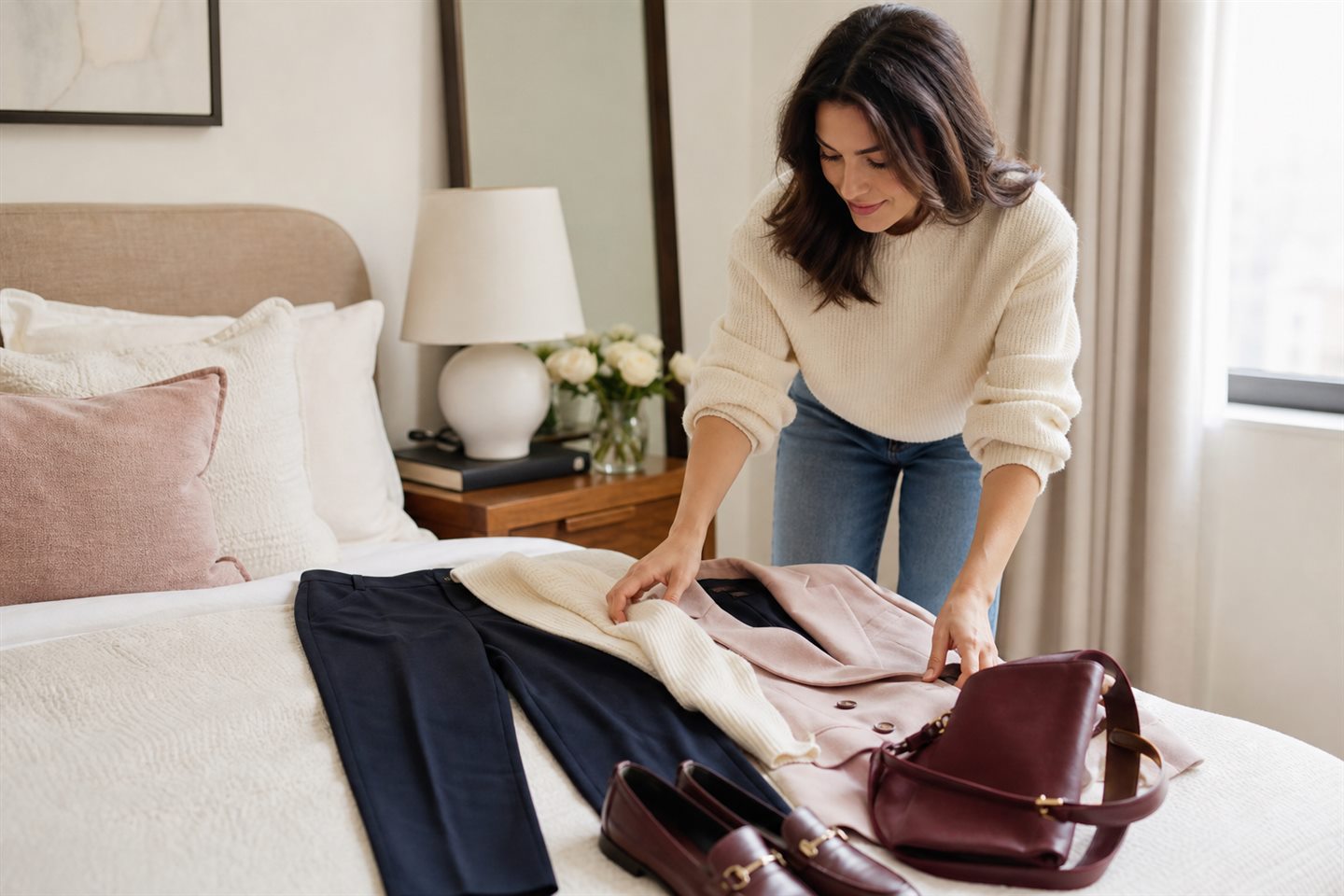
The easy workday: straight trousers, knit, jacket, low shoe
Start with straight or gently relaxed trousers and a knit that sits close enough to layer. Add a jacket with a clear shoulder or collar, then finish with loafers, slim sneakers, or an ankle boot. The formula works because each piece has a job: the trouser makes a clean line, the knit stays quiet, and the jacket gives the outfit shape.
Change the mood through fabric rather than buying a new silhouette. Cotton twill and a cardigan feel relaxed; fluid trousers and a blazer feel sharper. If the outfit looks too formal, leave the jacket open and use a softer bag.
The good-jeans formula: denim, polished top, deliberate belt
Choose the jeans you already trust, then add a top that contrasts with denim's casual texture: a crisp shirt, fine-gauge knit, draped blouse, or clean tank with an overshirt. A belt is useful when the waist is visible, but it should connect to the outfit rather than announce itself.
This is also where small alterations pay off. Jeans that hit the right point on the shoe will make more tops look finished. If every pair bunches at the ankle, the wardrobe problem may be the hem rather than a lack of interesting clothes.
The warm-day shortcut: one-piece base, practical second layer
A simple dress or matching top and skirt creates an easy base. Carry a layer that makes sense for the day—a cotton shirt, light cardigan, or unlined jacket—and choose shoes you can actually walk in. The second layer matters because it keeps the outfit useful in air conditioning, changing weather, and places where you want a little more coverage.
The relaxed proportion: wide bottom, compact top, visible waist
Wide trousers or a full skirt often need a top with less volume. That does not mean tight. A shorter knit, tucked tee, or shirt worn open over a fitted tank can create enough definition. If both halves are generous, show one point of structure: the waist, wrist, collarbone, or a sharp shoulder.
The evening-without-a-costume formula
Take a familiar daytime base—dark trousers and a knit, or jeans and a shirt—and change two things. Add a better-textured layer, such as a soft blazer or satin shirt, and switch to a more defined shoe or bag. Two changes are usually enough. Replacing everything can make you feel dressed as someone else.
Save formulas as photographs
When an outfit works, take a quick mirror photo and write one useful note: “needs flat shoes,” “better with sleeves pushed up,” or “works only with the shorter jacket.” After a month, you will have a personal reference library based on your own clothes and proportions.