Getting dressed
What to Wear When You Have Nothing to Wear
Published: · By Moda Selection editors
“I have nothing to wear” usually means something more specific: nothing feels right for this weather, this body, this meeting, or the amount of energy available at 7:40 in the morning.
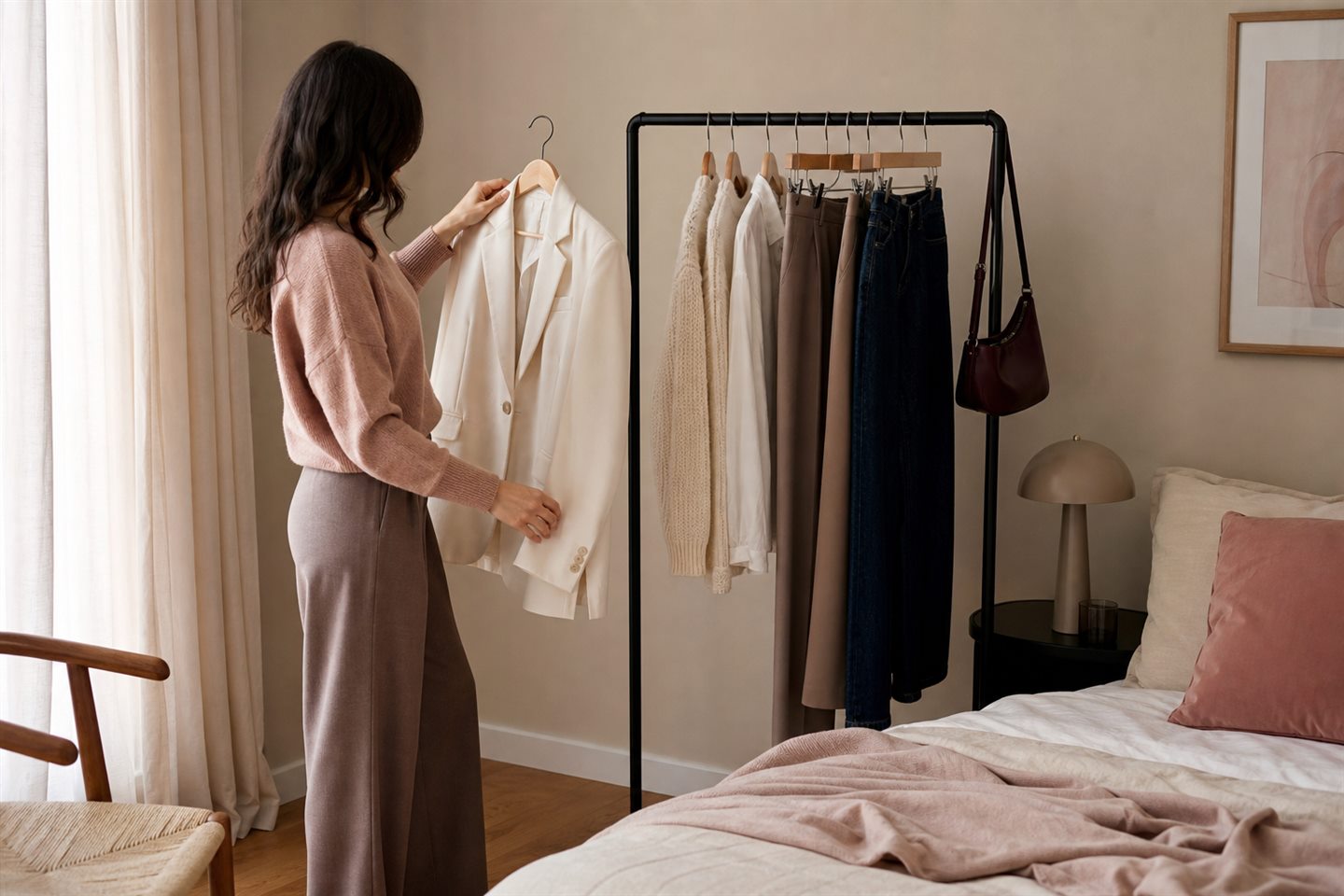
First, name the actual problem
Are your comfortable clothes too casual? Are the polished clothes uncomfortable? Is everything clean except the one bra or shoe that makes it work? Naming the blockage stops you from trying on seventeen unrelated tops.
If the problem is practical—rain, laundry, a long walk—solve that first. There is no point building an outfit around suede shoes when the forecast has already said no.
Begin with the item that has the fewest alternatives
For many days, that is the shoe. For others, it is the coat, a work trouser, or a dress code. Pick the least negotiable piece and build upward. This is much easier than choosing a blouse and discovering that none of your shoes make sense.
Use the last outfit that worked
Repeating an outfit is not failing at style. It is how personal style becomes visible. Wear the same trousers and jacket with a different knit, or keep the whole outfit and change the shoe. Nobody is maintaining a private database of your Tuesday clothes.
This is also why a small album of mirror photos is genuinely useful. Save the outfits that felt comfortable at 4 p.m., not only the ones that looked convincing for thirty seconds in the morning. On a stuck day, you want proof of what survived the day, not another stream of immaculate inspiration photos.
Try the “one soft, one sharp” rule
If an outfit feels sloppy, add one sharper element: a collar, clean belt, structured bag, pressed trouser, or jacket. If it feels stiff, add something softer: washed denim, a fine knit, relaxed sneaker, or sleeves pushed up. The contrast often matters more than another accessory.
Make a column of color
Wear similar colors on top and bottom, then add a contrasting layer. Black trousers and a charcoal knit under a camel coat; cream denim and an ivory tee under navy; blue jeans and a denim shirt with a burgundy bag. A color column reduces decisions and gives the eye one clean line.
Borrow a uniform from your own life
Think of the outfit you wear to the airport, the grocery store, or a casual dinner. These are often excellent formulas hiding behind unglamorous labels. Straight trousers, tee, cardigan, sneakers. Dark denim, blouse, loafers. Dress, jacket, flat shoe. Write down three and stop expecting inspiration before breakfast.
Change the finish before changing the whole outfit
Sometimes the clothes are fine and the outfit simply looks unfinished. Tuck only the front of a shirt, roll a sleeve once, swap the practical tote for a smaller bag, or repeat the color of the shoe somewhere near the face. These are two-minute changes, and one is usually enough. If you add a belt, scarf, jewelry, jacket, and lipstick all at once, you will never know which detail actually helped.
On the other hand, do not force a styling trick onto clothes that are sitting badly. A twisted seam or waistband that needs constant adjustment will keep bothering you no matter how good the necklace is.
Know when the problem is the closet
If getting dressed fails at the same point every week, you may have a genuine gap. Keep a note for a month. “Need a top” is not useful; “need a washable, non-sheer top that works under the navy jacket” is. A specific gap leads to a better purchase and fewer nearly-right replacements.