Shoe guide
How Shoes Should Fit Before You Leave the Store
Published: · By Moda Selection editors
“They will stretch” has rescued many sales and very few feet. Materials can soften, but a shoe that pinches, slips, or changes the way you walk in the fitting room is giving you useful information.
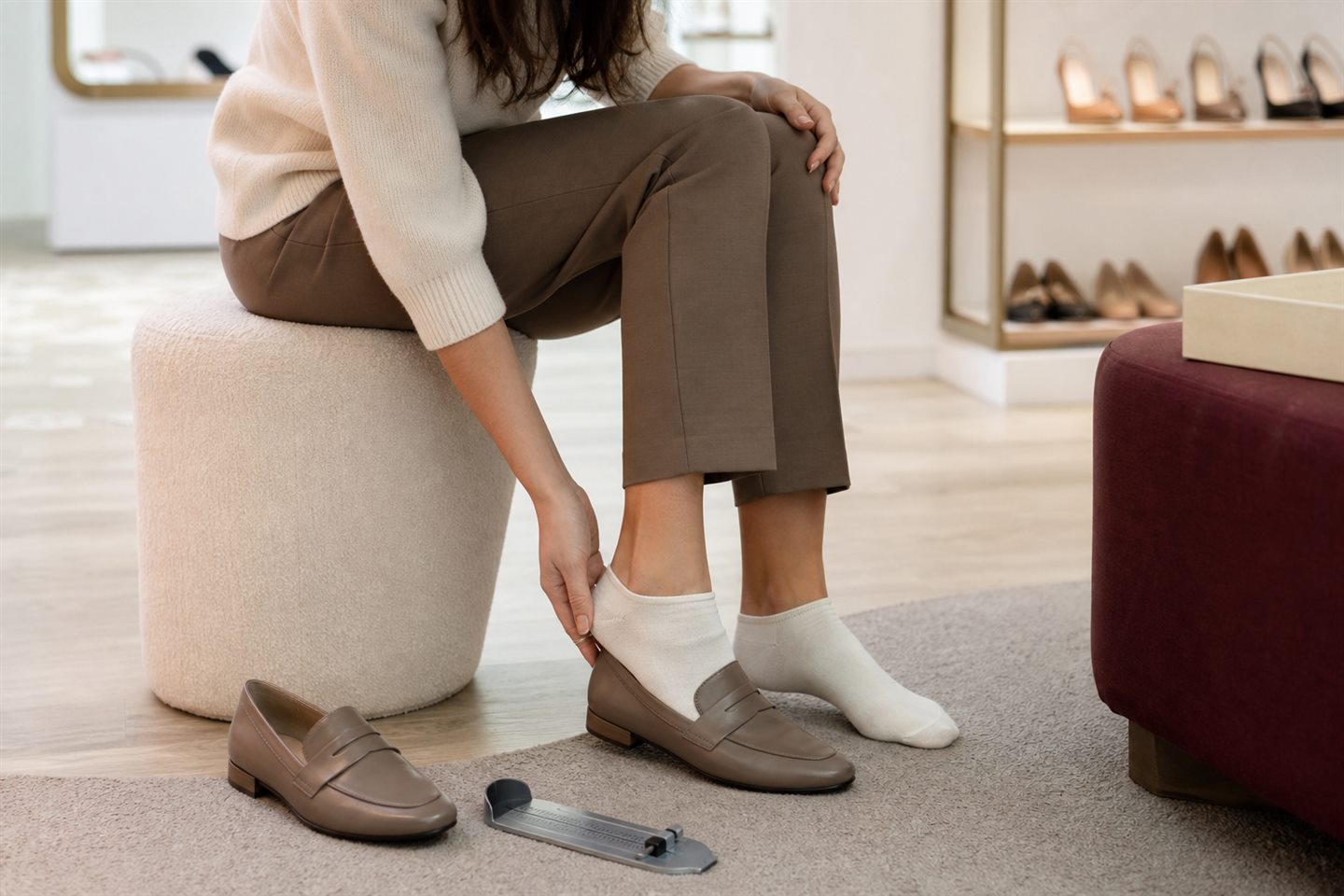
Try both shoes and stand up
Feet are rarely identical, and a shoe can feel generous while you are sitting. Lace or fasten both shoes as you would at home, stand, and walk on the hardest floor available. Notice your larger foot first. It should not feel as if the shoe is asking it to become smaller.
Shop later in the day when practical, especially if your feet tend to swell. Wear the type of sock or hosiery you plan to use. A winter boot tested with a thin try-on sock is not receiving a fair test.
Your toes need room without losing control
The front of the shoe should allow your toes to sit naturally rather than curling or pressing together. The exact space ahead of the longest toe varies by shoe type and foot shape, so focus on movement and pressure rather than a universal finger-width rule.
A pointed toe box creates its shape beyond the foot; your toes should not be squeezed into the point. If the upper bulges around the toes or a nail presses against the end on a small slope, try another size, width, or shape.
Heel movement should be small and stable
A little lift can occur in a stiff new shoe, but your heel should not rise enough that you grip with your toes to keep the shoe on. In loafers and flats, check whether the opening cuts into the foot while the heel still slips. That combination often signals that the last—the shape on which the shoe was built—does not suit your foot.
Width problems do not disappear by sizing up forever
Going up a full size may create extra length without giving width where you need it. If the ball of your foot spills over the sole, the upper pulls sharply, or the side of the shoe presses on a joint, look for another width or a rounder shape.
Walk the way you actually walk
Take a brisk lap. Turn, stop, and use a stair or incline if one is available. A shoe intended for commuting should feel controlled when your attention is somewhere else. Listen for squeaks, feel for seams, and notice whether one shoe bends at an uncomfortable point.
Know what can change
Leather may soften and a firm sole may flex more easily. The shoe is unlikely to become longer, move a misplaced seam, or transform a narrow toe box. Insoles and heel grips can fine-tune a nearly good fit; they should not be used to engineer an entirely different shoe.
Persistent foot pain, numbness, or a condition that changes your fitting needs calls for advice from a qualified health professional, not a general shopping guide.