Shoe care
How to Break In New Shoes Without Wrecking Your Feet
Published: · By Moda Selection editors
New shoes can be stiff. They should not require a blood oath. Breaking in shoes means letting materials flex and soften gradually; it does not mean teaching your feet to accept a bad fit.
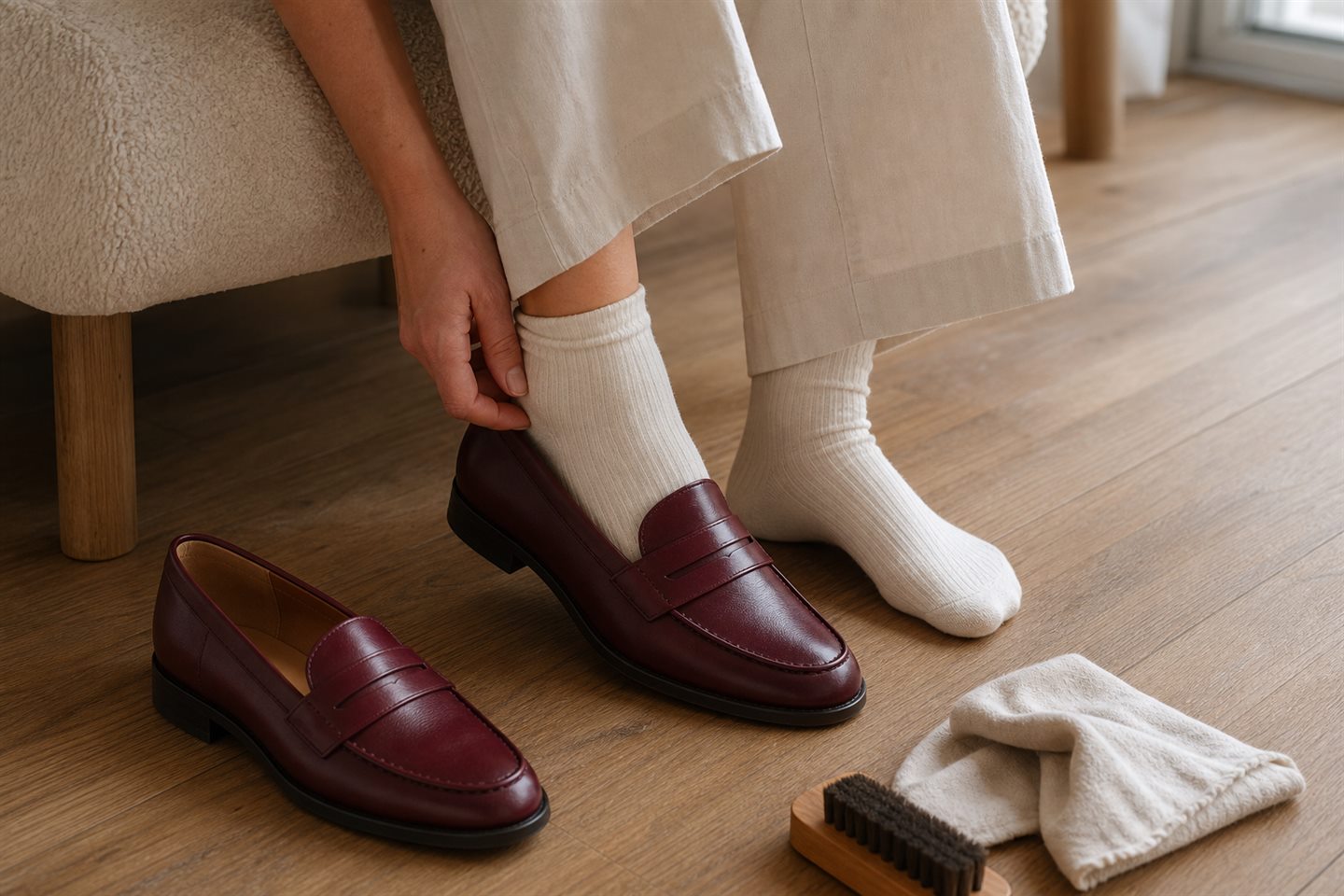
Decide whether the shoe needs breaking in—or returning
A firm leather upper and a new sole may relax. A toe box that squeezes your toes, a seam pressing directly on a joint, or a heel that slips dramatically is a fit problem. Shoes are unlikely to become longer, and sizing up does not always fix width.
Try both shoes late enough in the day that your feet are not at their smallest. Walk on a hard floor. If you are already changing your stride, stop. The return window is more valuable than any stretching trick.
Wear them at home in short sessions
Start with twenty or thirty minutes while you cook, fold laundry, or answer email. The point is to find friction before a commute finds it for you. Increase the time over several wears if the shoe feels better, not simply because the calendar says it should.
Use a clean floor and keep every label, insert, and piece of packaging until you are certain. A ten-minute walk around the block may sound more realistic, but it can also end the return conversation. Indoor testing gives you useful information without turning the purchase into a commitment.
Use the socks you plan to wear
A slightly thicker sock can help a leather shoe relax, but forcing the shoe with extremely thick layers may distort it or create new pressure. For loafers, flats, and boots, test the actual hosiery or sock thickness the outfit requires.
Protect predictable friction points
If your heel often rubs, use a blister bandage or friction barrier before the skin is sore. Make sure the shoe remains secure; piling padding into a loose heel can make fit less stable. Keep a backup pair with you on the first full outing. This is not defeat. It is good planning.
Pay attention to where the irritation begins. Rubbing at the top edge may improve as a stiff collar softens. Pressure under the ball of the foot or tingling across the toes is a different message. “New shoe discomfort” is too vague to be useful; the location and type of discomfort tell you whether the next wear is sensible.
Treat materials differently
Leather conditioner may help some smooth leather soften, but use a product intended for that finish and test it in an inconspicuous spot. Suede, patent leather, coated materials, and synthetics can react differently. Heat, soaking, and aggressive bending can damage adhesives, finishes, and shape.
For an expensive pair or one that needs a precise width adjustment, a shoe-repair professional is a better bet than an internet hack involving a hair dryer and optimism.
Know when to stop
Numbness, sharp pain, persistent pressure, or repeated blisters are not a normal price of admission. Stop wearing the shoes. If foot pain persists or you have a condition that affects sensation or fit, seek qualified professional advice.
And once a pair is comfortable, resist the temptation to wear it for three twelve-hour days in a row. Alternating shoes lets them dry and gives your feet a small change in pressure. The break-in process is finished when you stop thinking about the shoes—not when you have learned to carry bandages everywhere.