Beauty guide
How to Patch Test Skincare Without Turning It Into a Science Project
Published: · By Moda Selection editors
A new serum can be exciting. A new serum, moisturizer, exfoliant, and sunscreen introduced on the same Sunday night is mostly a detective story waiting to happen. Patch testing skincare slows the process down just enough to give you useful information.
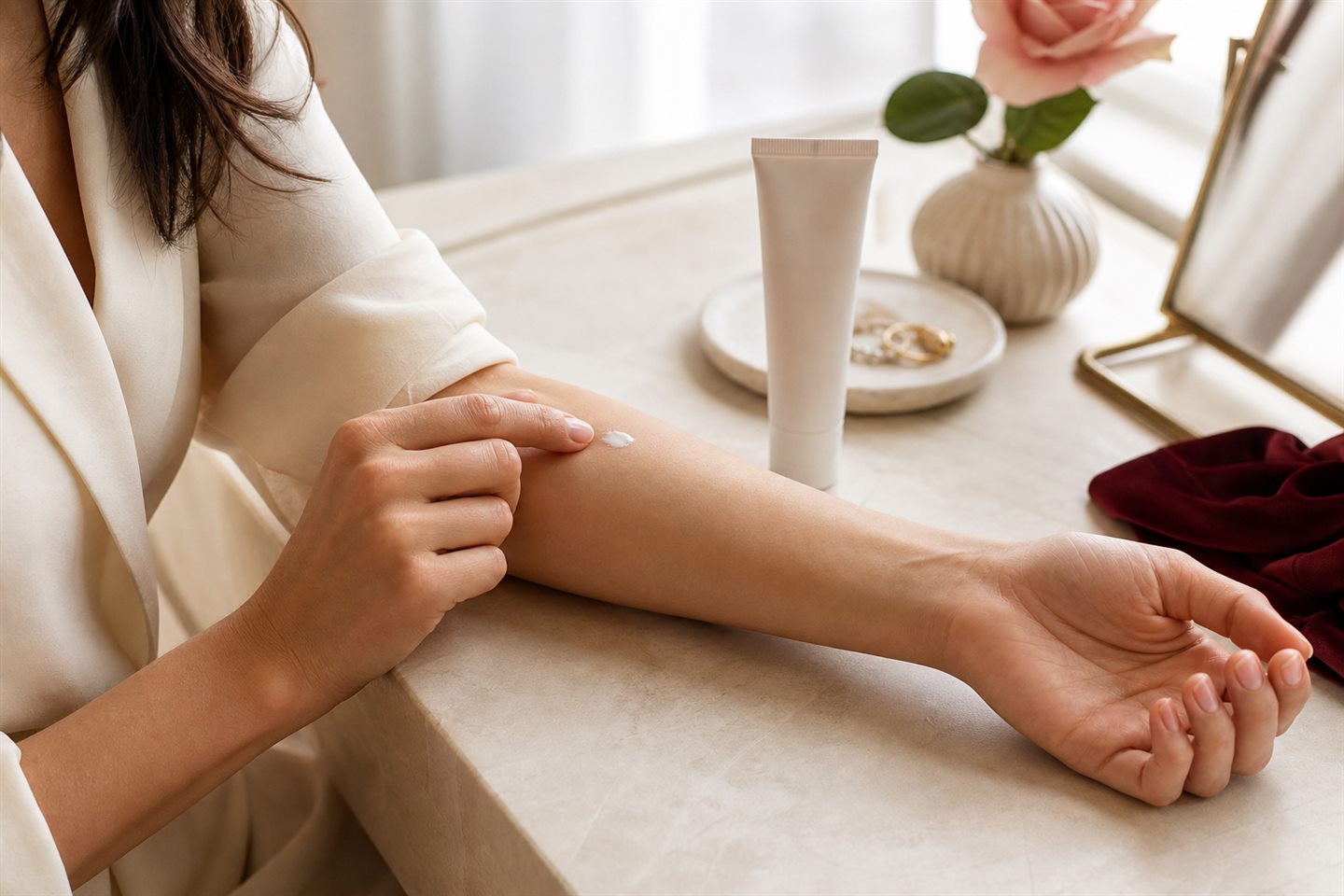
First, know what an at-home patch test can tell you
An at-home test is a cautious trial on a small area of skin. It may reveal obvious irritation or a delayed reaction before you spread the product over your face. It cannot guarantee that the product will never cause trouble, and it is not the same as the formal patch testing a dermatologist uses to investigate contact allergies.
That distinction matters. Facial skin, eyelids, and the skin around the mouth can behave differently from an inner arm. Think of the test as a useful screening step, not a certificate of universal compatibility.
Use one product and follow its normal directions
Choose the product you genuinely plan to add next. Do not test three creams in adjacent spots unless a clinician has told you to. If redness appears, you want one likely suspect, not a lineup.
The American Academy of Dermatology recommends applying the product to a quarter-sized test spot twice daily for seven to ten days, using the normal amount and thickness. The underside of the arm or bend of the elbow is practical because it is easy to watch and less likely to be washed or rubbed constantly.
Rinse-off products still get rinsed off
If you are testing a cleanser or mask, leave it on only as long as the directions say, then rinse it away. Keeping a five-minute product on all afternoon does not make the test more thorough; it creates a different use case. For leave-on products, let the area dry and avoid covering it with a tight bandage unless a healthcare professional instructs you to do so.
Keep the rest of the routine boring
This is not the week to change laundry detergent, start a retinoid, and scrub the test area with a new body exfoliant. Use your familiar products elsewhere and leave the test spot alone. A quick phone note with the product name, start date, and any change you notice is enough. You do not need a spreadsheet.
Know what counts as a reason to stop
Redness, itching, swelling, burning, blistering, or a rash are reasons to wash the product off and stop the test. A strong reaction, facial swelling, breathing difficulty, or rapidly worsening symptoms need prompt medical attention. If a mild reaction does not settle, seek professional advice rather than testing the product again to “make sure.”
A product can also pass the arm test and feel unpleasant on the face. When you eventually introduce it, use it exactly as directed and keep the rest of the routine stable for a while. Stinging, persistent tightness, or a growing rash is still information even if the first test looked quiet.
Patch testing is especially useful when the shelf is crowded
The more products you rotate, the harder it is to identify what changed. Introducing one item at a time makes reactions easier to trace and also reveals whether the new step is doing anything worth keeping. Sometimes the most useful result is realizing that the routine was already fine.
This guide offers general skincare information, not diagnosis. People with a history of severe reactions, eczema, contact allergy, or another skin condition should ask a qualified healthcare professional how to introduce new products.